Nasal irrigation products are gaining attention among users who want to maintain regular nasal care habits. Different product designs can influence water flow, operation methods, portability, and cleaning experience. For distributors and procurement teams, understanding the differences between electric devices and squeeze bottles helps them evaluate products based on different customer needs.
The choice between these two designs is related to usage habits, target markets, and product functions. By comparing structure, operation, and practical features, buyers can better understand which type of product may fit different user groups.
Different Irrigation Designs for Various User Needs
Squeeze bottles use manual pressure to push water through the nasal passage. Users need to control the pressing force during operation. This structure is simple and does not require charging, which can be suitable for users who prefer a basic approach.
However, manual pressure can vary depending on the user’s operation method. Some users may need time to adjust the force and water flow. This difference can influence the overall experience during regular use.
Electric irrigation devices use motor-driven systems to control water delivery. A powered nasal irrigation system can provide more structured operation through different working modes and pressure settings. This design gives users more choices when they consider comfort and daily routines.
For businesses reviewing nasal care categories, understanding these design differences is important. Product structure, customer expectations, and market positioning should be considered together during selection.
How Water Flow Influences Daily Experience
Water flow control is an important factor when users compare different irrigation products. Squeeze bottles mainly depend on manual force, while electric models can use preset modes to manage water output.
A nasal sinus irrigation system usually focuses on stable water delivery through technical design. Functions such as pulse operation, pressure adjustment, and flow control can influence how users experience the product.
Different users may have different preferences. Some may look for a softer water flow, while others may prefer adjustable settings for different situations. Multiple modes can provide more flexibility for various application scenarios.
We consider these elements when developing nasal and oral care solutions. Our approach focuses on combining practical functions with manufacturing experience to support different OEM and ODM projects.
Key Factors in Portability and Product Structure
Portability is another factor that affects purchasing decisions. Traditional squeeze bottles do not need batteries, but users still need to prepare water and control the operation manually.
Electric products usually include additional components such as a rechargeable battery, water tank, and charging system. These structures can affect product size, weight, and convenience during travel.
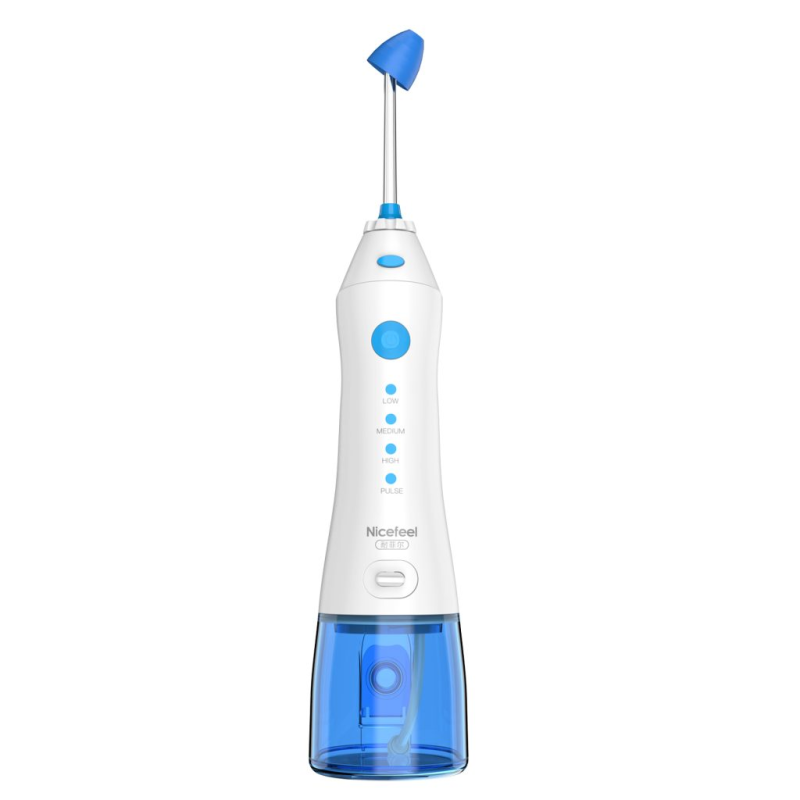
Our Portable Nasal Irrigator-NJ1581 is designed for users who need a compact nasal care option. The product size is 81mm x 65.5mm x 226.5mm, and the net weight is approximately 285g. The components include a machine body, water tank, charging cable, and nasal jet tip.
The device includes a 220mL water tank and four cleaning modes: soft, medium, normal, and pulse. It also features an exclusive anti-leakage drainage patented design and supports convenient daily use.
Product Features That Matter for Market Selection
For distributors and buyers, technical details can help evaluate whether a product matches local market requirements. Factors such as charging time, noise level, waterproof performance, and maintenance convenience may affect customer acceptance.
The NJ1581 uses a 2000mAh battery with a charging time of ≤3.5 hours. It supports a water jet pulse of 1250±20% RPM, with a pressure range of 0-10 psi and water flow of 74-185mL/30s.
The device also has an IPX7 waterproof grade and a noise level of ≤75dB. These specifications provide reference points for businesses when comparing different product designs and planning product lines.
At Flycat, we provide OEM and ODM support for partners who need customized nasal and oral care products. Our development process covers design, testing, and production coordination according to different project requirements.
Which Design Fits Different User Groups
Different customer groups may have different expectations for nasal irrigation products. Families, travelers, and daily care users may focus on different features when choosing equipment.
Squeeze bottles may attract users who prefer simple operation and manual control. Electric irrigation products may be considered by users who value adjustable modes, stable water delivery, and portable functions.
For procurement teams, product selection requires an understanding of user habits and market demands. Comparing product structure, functions, and application environments can help businesses create suitable product strategies.
A well-developed nasal sinus irrigation system should balance comfort, usability, and practical needs. The right design depends on the target users and the market conditions.
Practical Considerations for Future Product Planning
Nasal irrigation products continue to develop as users look for more convenient care solutions. Comparing squeeze bottles with electric devices allows buyers to understand how different designs respond to various requirements.
From water control to portability, each design has its own application value. We continue to improve product solutions by combining technical development, manufacturing experience, and customer feedback.
With experience in customized care products, Flycat works with partners to develop solutions for different markets. Understanding these product differences helps businesses make clearer decisions and build product offerings that match customer expectations.