Oral care products are becoming more diverse as users look for equipment that matches their daily routines. Countertop oral irrigators and portable models are designed for completely differentiated usage scenarios, so understanding their multi‑dimensional differences helps buyers evaluate product functions, complete product positioning and SKU portfolio planning more clearly.
For oral-care brands and distributors, product structure, cleaning experience, and user scenarios are important factors during selection.
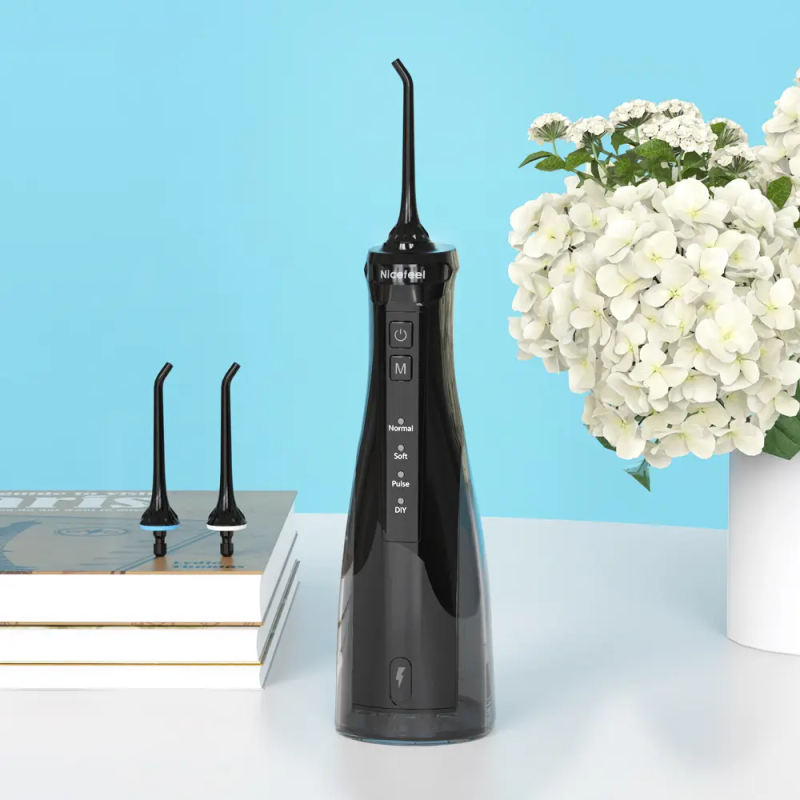
Basic Differences Between Portable and Countertop Oral Irrigators
Countertop oral irrigators are usually designed for fixed locations, such as home bathrooms. They normally include a larger water reservoir, a stable base, and a direct power connection. This structure can support users who prefer keeping their oral care equipment in one place.
A portable model focuses more on mobility and flexible use. A portable electric oral irrigator usually combines the water tank, power system, and control functions into a compact body. This design allows users to carry and store the device more easily.
The main difference between the two categories is not only product size. Water capacity, charging method, storage requirements, and usage frequency also affect user experience. Countertop products focus on stationary operation, while portable products are developed for changing environments.
We review these differences during product development because different markets may have different expectations. Understanding user habits helps brands and distributors plan suitable product selections.
Design Structure and Daily Convenience
Portable oral irrigators require careful structural design because more components need to fit into a smaller space. The internal layout, battery placement, and water system all influence the final product experience.
Compared with countertop devices, portable models are easier to store and carry. They can be used during travel, business trips, or in smaller living spaces where a large device may not be convenient.
The design of a portable device also needs to balance performance and comfort. Product weight, grip design, charging method, and water capacity all affect how users interact with the equipment during daily cleaning.
Our development process considers these details from early design to production. We combine engineering experience with market feedback to support partners who need products for different sales channels.
Water System and Cleaning Performance Factors
Water‑circuit architecture is one essential distinction between portable and countertop oral irrigators. Countertop versions commonly apply separated large external water‑tank + connecting‑hose structure; portable ones adopt integrated‑enclosed water‑tank without inner connecting‑hose.
The 280mL Portable Electric Oral Irrigator FC5610 is developed for oral-care brands and distributors. The model features a tube-free water intake system, a 280mL encircling water tank, and four cleaning modes to support different daily cleaning preferences.
Pressure adjustment is another factor buyers may consider. FC5610 provides a 20–120 PSI pressure range, allowing users to select different cleaning levels. The 1500mAh rechargeable battery design supports convenient use without a fixed power connection.
When evaluating a portable irrigator, businesses can review the relationship between water flow, battery capacity, and product structure. These details influence how the product fits into different market positions and customer expectations.
Manufacturing Support for Market Needs
Product selection is only one part of oral care business planning. Brands and distributors also need to consider production capability, customization support, quality management, and compliance preparation.
Flycat provides OEM and ODM solutions for global oral care partners. We have developed technologies including quiet motor systems, anti-rotation nozzle designs, and removable ozone modules to support different product development requirements.
Our R&D team covers the process from product research and design to prototyping and mass production. We also work with certification organizations such as UL, TÜV Rheinland, TÜV SÜD, SGS, and Intertek to support regional compliance needs.
For purchasing teams, stable communication and production management are important during cooperation. We focus on project coordination, manufacturing processes, and delivery planning to help partners manage product development more efficiently.
Portability for Different User Scenarios
User application is an important factor when comparing different oral irrigator types. Countertop devices may suit users with fixed home setups, while portable products provide more flexibility for people with active lifestyles.
Travel users often prefer equipment that occupies less space and can be charged easily. Portable designs allow users to maintain oral care routines in different locations without carrying large accessories.
Sales channels also influence product selection. Online retailers, specialty stores, and distributors may focus on different customer groups. Reviewing product functions together with target markets helps businesses create clearer product plans.
A Practical Choice for Oral Care Products
The difference between portable and countertop oral irrigators comes from design purpose, usage environment, and customer needs. Portable models focus on flexibility, while countertop products emphasize fixed home use and larger structures.
The portable electric oral irrigator market continues to attract attention as consumers look for convenient personal care solutions. We continue to study market requirements and develop products that combine practical functions with manufacturing support.
Flycat works with partners through OEM and ODM services, helping brands and distributors develop oral care products with suitable designs and production processes. By reviewing product features, user scenarios, and market needs together, businesses can create solutions that match their development goals.