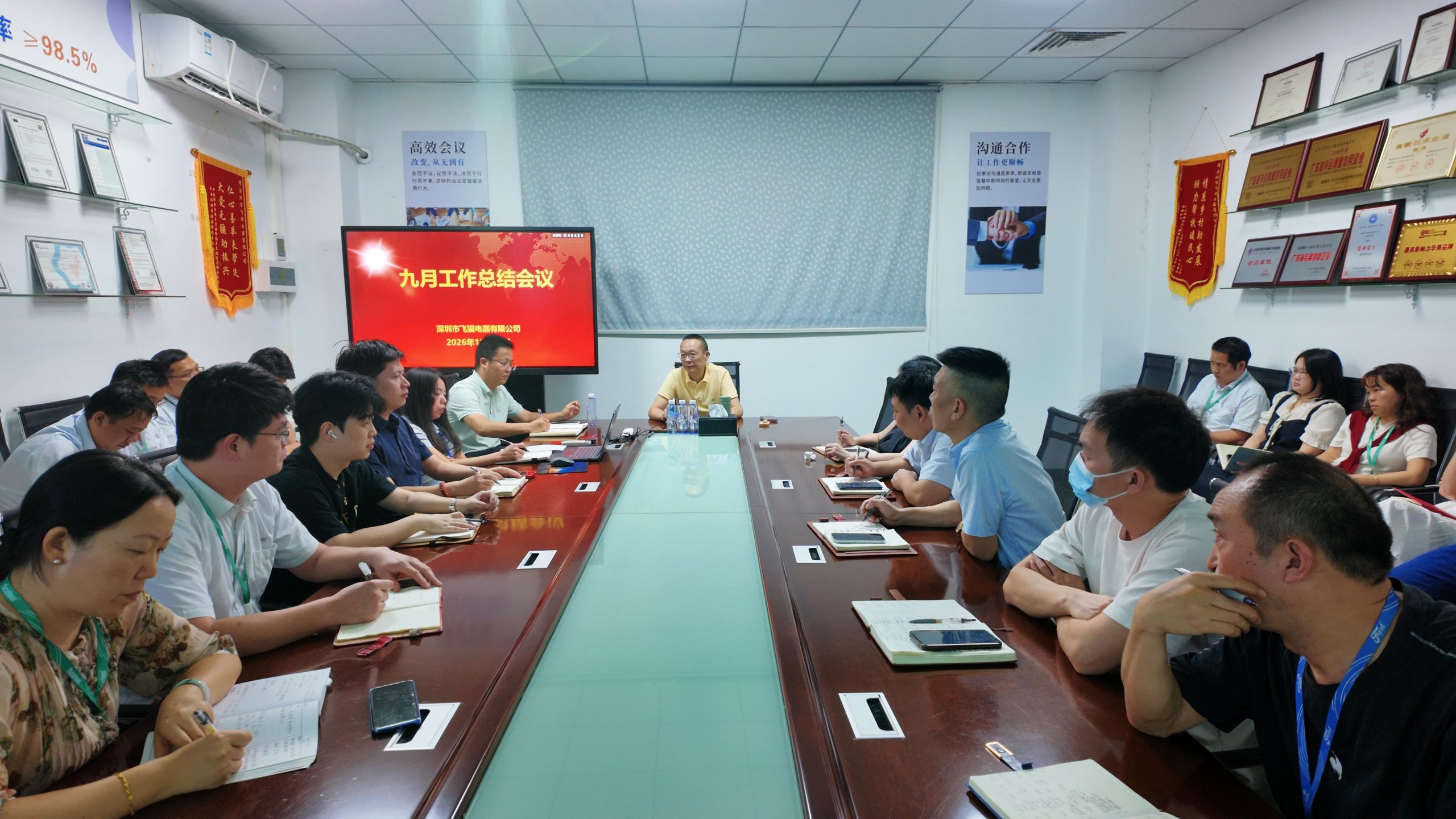
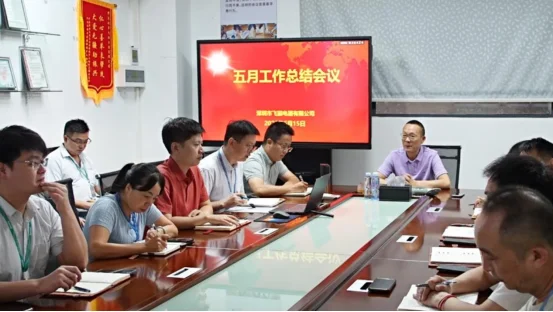
June 2026, Shenzhen – Our company’s monthly business operation meeting was held recently. Faced with multiple headwinds, including intensifying competition in the oral care industry, volatile raw material prices, and shifting market demand, the meeting themed Review, Break Through Barriers, Cut Costs, Evolve gathered the management team and heads of all departments.
The meeting set a clear strategic direction: return to the first principles of physics and commercial operations, and launch an all-round restructuring covering product portfolio, organizational mindset, and operational models, so as to consolidate the enterprise’s core competitiveness amid the industry’s adjustment cycle.
I. Learn from Benchmarks to Unify Thinking; Root Operations in First Principles
During the meeting, all staff were organized to watch a video analyzing Elon Musk as a benchmark case. The team thoroughly extracted four core strengths of the benchmark enterprise: withstanding pressure to break through bottlenecks, delivering on long-term visions, efficient team management, and relentless execution. The session empowered all employees by centering on core mindsets: first principles, steadfast commitment to goals, and inertia-free decision-making.
The meeting emphasized that learning from industry benchmarks does not mean copying industry giants. Instead, every employee must apply first principles to daily work: trace complex challenges back to their physical fundamentals, break down intricate problems into the smallest constituent units, and resolve them categorically. Middle managers in particular shall strengthen their capacity for independent and systematic thinking, take initiative to overcome obstacles, and lead their teams to forge ahead amid headwinds.
II. Special Thematic Discussions: Practise First Principles and Confirm Full-Scope Cost-cutting & Product Upgrade Core Solutions
During the core discussion session of the meeting, all participants reached unanimous resolutions focusing on four key priorities: cost reduction guided by first principles, establishment of tiered product standards, cross-departmental collaboration, and breaking through market headwinds. The team agreed to abandon ingrained industry mindsets centered on conventional cost control and homogeneous R&D, and formulate actionable strategies rooted in the essence of product value, manufacturing processes, and customer demands.
(I) Root-Cause Cost Reduction: Trace Full Value Chains to Cut Redundant Expenses
Upholding the cost control logic rooted in first principles, R&D, Supply Chain, Production, and Quality Control teams will work in synergy to break down costs across the entire chain, including raw materials, product architecture, manufacturing processes, molds, and warehousing.
Five cost-reduction initiatives will be implemented: process improvement, replacement of raw materials with compliant alternatives, thinning of product plastic thickness, splitting of non-standard parts, and mold reuse. Small-scale refined cost savings across all links will collectively drive overall profit growth.
Four types of hidden costs will be stringently controlled: unnecessary mold revisions, duplicate mold development, material scrap, and redundant manpower. The core performance and quality baseline of products will be strictly maintained, and cost-cutting measures that compromise product quality will be firmly rejected.
(II) Tiered Product Innovation: Abandon Uniform Standards to Align with Clients’ Pricing Requirements
The meeting laid strong emphasis on rolling out tiered product standards. The previous model of “one single standard for all customers” has been officially discontinued. Sales, R&D, Quality Control, and Supply Chain departments will jointly formulate tiered product criteria, specifying differentiated requirements for motor service life, materials, drop tests, and manufacturing processes corresponding to each product tier.
The core logic behind this initiative is to precisely align product specifications and quality benchmarks with diverse channel characteristics and end-users’ perceived value, eliminating manufacturing resource waste caused by rigid one-size-fits-all requirements. Frontline business teams must accurately communicate customer positioning and target price brackets to avoid mismatched information that triggers repeated mold and structural revisions downstream, thus eradicating unnecessary consumption of R&D and production resources at the source.
(III) Cross-Departmental Collaborative Breakthroughs to Remove Barriers in End-to-End Business Cycles
A pre-review mechanism for new products will be established. At the R&D project initiation stage, the Supply Chain, Engineering, Quality Control, and Business departments will be engaged in parallel to conduct advanced assessments of material costs, mass production feasibility, and quality control standards.
The business team will feed back customer customization requirements promptly to drive structural optimization of products in reverse for R&D. Production and QC teams will participate in new product testing at an early stage to minimize rework due to defects after mass launch.
Departmental parochialism will be eliminated. Approval workflows will be streamlined and unproductive communications cut down to boost overall office efficiency and project progress speed.
III. Executive Vision: Sustain Operations, Improve Margins, Win Respect with Outstanding Products
In his concluding address, the General Manager stated: Exceptional companies seldom grow and thrive during prosperous times; tough market headwinds are where transformative breakthroughs take shape.
2026 stands as a critical milestone marking the start of the company’s second decade. All employees must align efforts around four core priorities: secure operational sustainability, boost profit margins, expand market coverage, and upgrade product competitiveness.
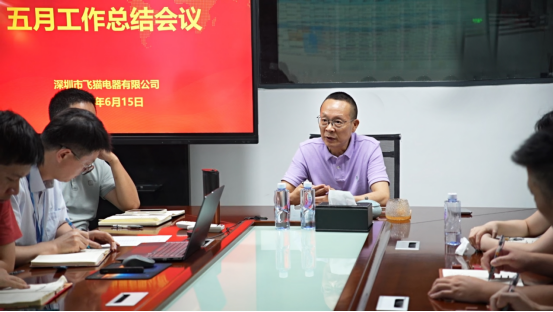
“Cost reduction is not the task of a single department, but the shared responsibility of every employee.”
The meeting clarified respective responsibilities for each team: R&D shall set baseline costs, Procurement shall manage material prices, Production shall minimize waste, and Quality Control shall slash rework. All departments shall implement relevant measures step by step to generate cumulative benefits.
The General Manager shared a message with all staff: Market volatility is an enduring norm. Only by taking the initiative to transform and pursuing continuous improvement can the enterprise gain a solid foothold in the industry.
Over the next six months, the whole team shall prioritize enhancing product competitiveness and profitability, win customers’ recognition through superior product strength, and completely break away from vicious low-price competition.